A circle in Lisbon · every Thursday

Nail standing: a practice of acceptance

An Indian tool for people who are building their lives and don't want to tense up under the pressure.

An hour and a half, once a week. Contribution €45.

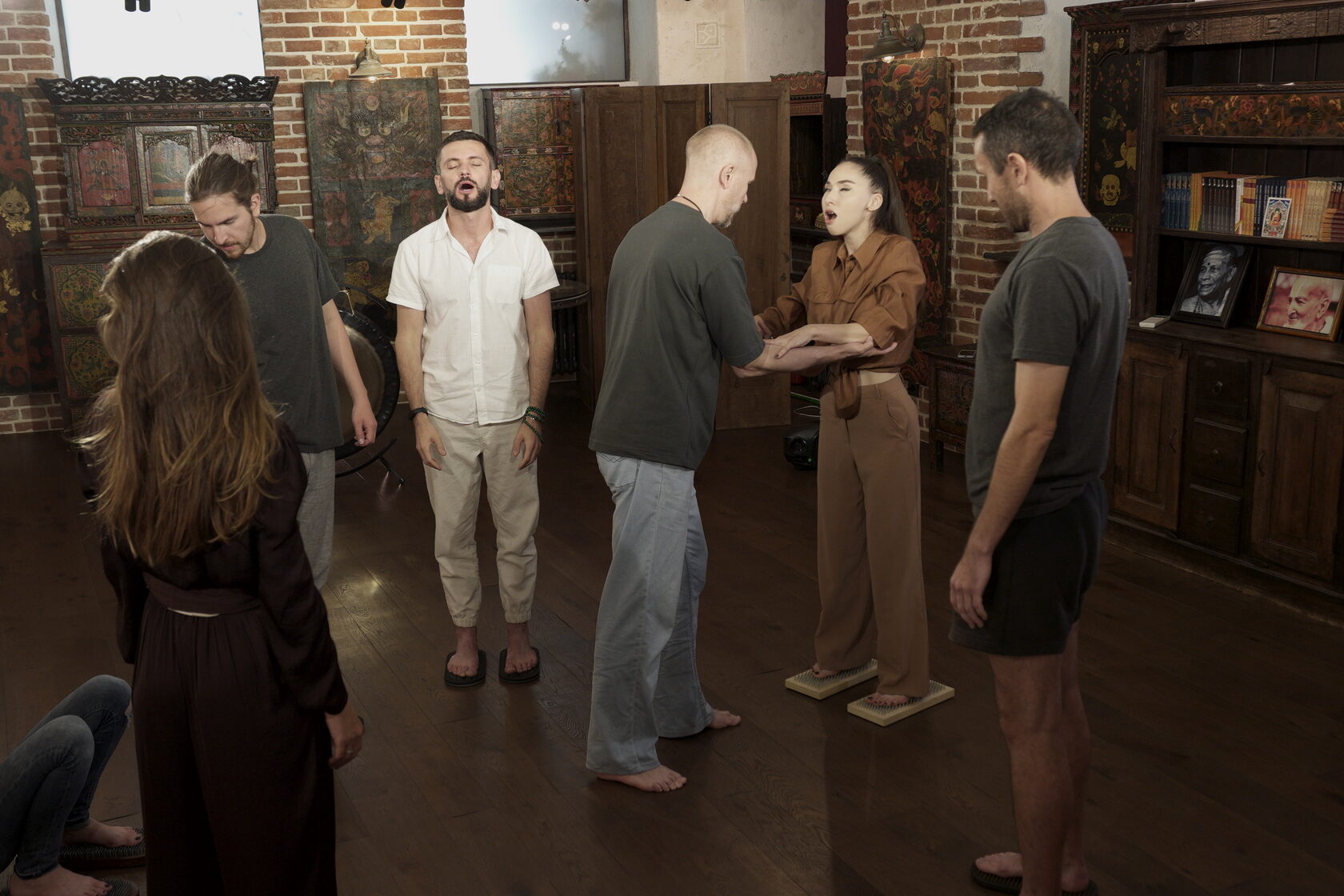
People in the circle stand on nail boards while the guide supports a participant by the arms
WhenEvery Thursday, 19:00–20:30
WhereEstefânia, Lisbon
FormatA guided circle
Contribution€45 per session
01

Acceptance of what?

Tension starts where we argue with what already is. Recognise anything from your own life?

A decision made without you

You were let go, turned down, left. It has already happened, and you are still arguing with it.

A person who doesn't change

A partner, a parent, a boss. You have waited years for them to become someone else.

Your own mistake

You made the wrong call and you are still beating yourself up over it.

What you never chose

Your age, your body, your tiredness, your temperament. You have to live with it, and you want to redo it.

Change that went off plan

A move, a new country, money, work. None of it is going the way you pictured.

Other people's pace

Everyone around you is getting more done while you are on pause. And you are angry at yourself for it.

On the board you see this within a minute. The nails are there, and arguing with them is pointless. While you resist, it hurts. The moment you stop, it eases.

You take this skill back to everything on the list above. To accept is to stop spending your strength on the argument and put it into action.

02

What it is

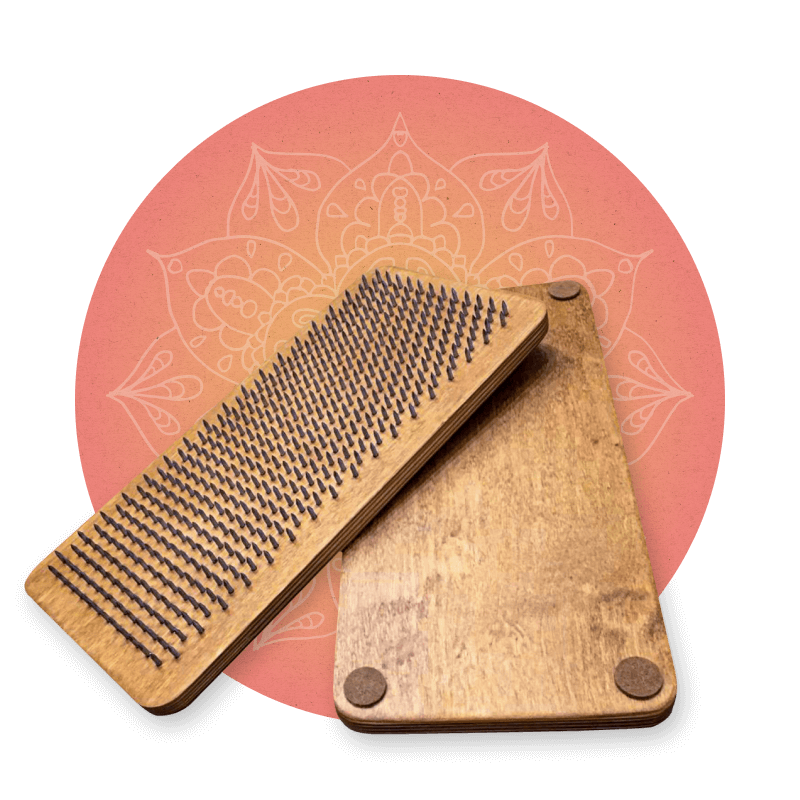
A sadhu board is a wooden board with hundreds of nails. You step onto it barefoot and stand for a few minutes. A guide is beside you, and so is a circle of people doing the same.

The practice comes from the austerities of India's sadhus. Today it is used as a tool: within a minute on the board you can see how you deal with pressure.

Is it safe?

The nails don't pierce the skin: your weight is spread across hundreds of points. The sensation is strong, especially in the first minute. You can step off at any second.

Two wooden sadhu boards with nails
03

What you get

The practice works on four levels. From each one you take away a technique you can use the very next day.

Body

Warm feet and a lift in energy afterwards. You find out exactly where you clench: jaw, shoulders, belly.

Where you'll use it

At your laptop you notice your jaw is tight and your shoulders are up by your ears. You drop them in one breath out.

In the language of practice

The heat of practice, tapas
Mind

The skill of the pause: your mind orders you to step off, and you stay and breathe.

Where you'll use it

A sharp message arrives from a client or your boss. You don't fire back: breathe out, pause, then reply.

In the language of practice

The witness position

Emotions

A way out for what has built up: voice, laughter, tears. Many call it a weight off their shoulders.

Where you'll use it

After a hard day you don't snap at the people at home: what had built up already came out on the board.

In the language of practice

Letting go

Intention

Clarity on the one question you came with. On the board you quickly see what matters and what is noise.

Where you'll use it

You finally book that doctor's appointment, ask for the raise, or close the thing you have been dragging for six months.

In the language of practice

Sankalpa, the power of intention

If you already meditate: stillness of mind arrives here within minutes, and sitting practice goes deeper afterwards.

Book your place
04

You come with an intention to change something. You leave with the strength to do it.

What participants talk about most is the first two days after the circle. Three stories that keep repeating.

Before the circle

Couldn't bring yourself to have a difficult conversation.


After

Within the first day you call or write to that person.

Before the circle

Carried an old resentment.


After

The resentment loosens, and you think of the person more calmly.

Before the circle

A task looked impossible.


After

Ideas arrive, and so does the push to start.

This is what participants report, not a guarantee: everyone has their own question and their own timing.

“An hour and a half a week. You release what you don't need and gain an edge over your former self. It's like armour. And a proper kick in the pants: you'll get a lot decided.”
Dimitri Subbotin, circle guide
05

Who this circle is for

You don't need any experience of yoga or meditation. It's enough to recognise yourself in one line.

  • You do a lot, and by evening your body is clenched and your head is noisy.
  • Life is changing, and you are gripping control harder than you would like.
  • You have tried yoga, meditation or breathwork and want a tool you can feel from the first minute.
  • You need a place and people you can come back to every week.

The circle is not for you if you are looking for treatment for an illness or a guaranteed result. The list of contraindications is in the questions section.

06

The practice comes differently to men and to women

A guide's observation from years of circles.

For men it's a challenge

The habit of controlling everything holds tight, and relaxing doesn't come straight away. But the moment control lets go stays with you for a long time.

With women it is gentler

Women usually let go sooner. Relaxation arrives earlier, and there is more time left to stay in the quiet.

It gives to both equally. Men and women alike leave with a different relationship to their doubts.

This is an observation, not a rule: in the circle it also goes the other way.

You don't need to become superhuman. Being human is already extraordinary.
Paraphrasing Sadhguru
07

How the circle goes

An hour and a half, three steps. You don't need to know how to do anything beforehand.

  1. Getting to know each other

    The guide explains how the board acts on body and mind. Participants meet, and each names the intention they came with.

  2. Practice

    We step onto the boards to music. The first minute is the sharpest, then the body adjusts. The guide is close by, and you can step off at any moment.

  3. Sharing

    We sit in a circle and share what happened: sensations, emotions, thoughts.

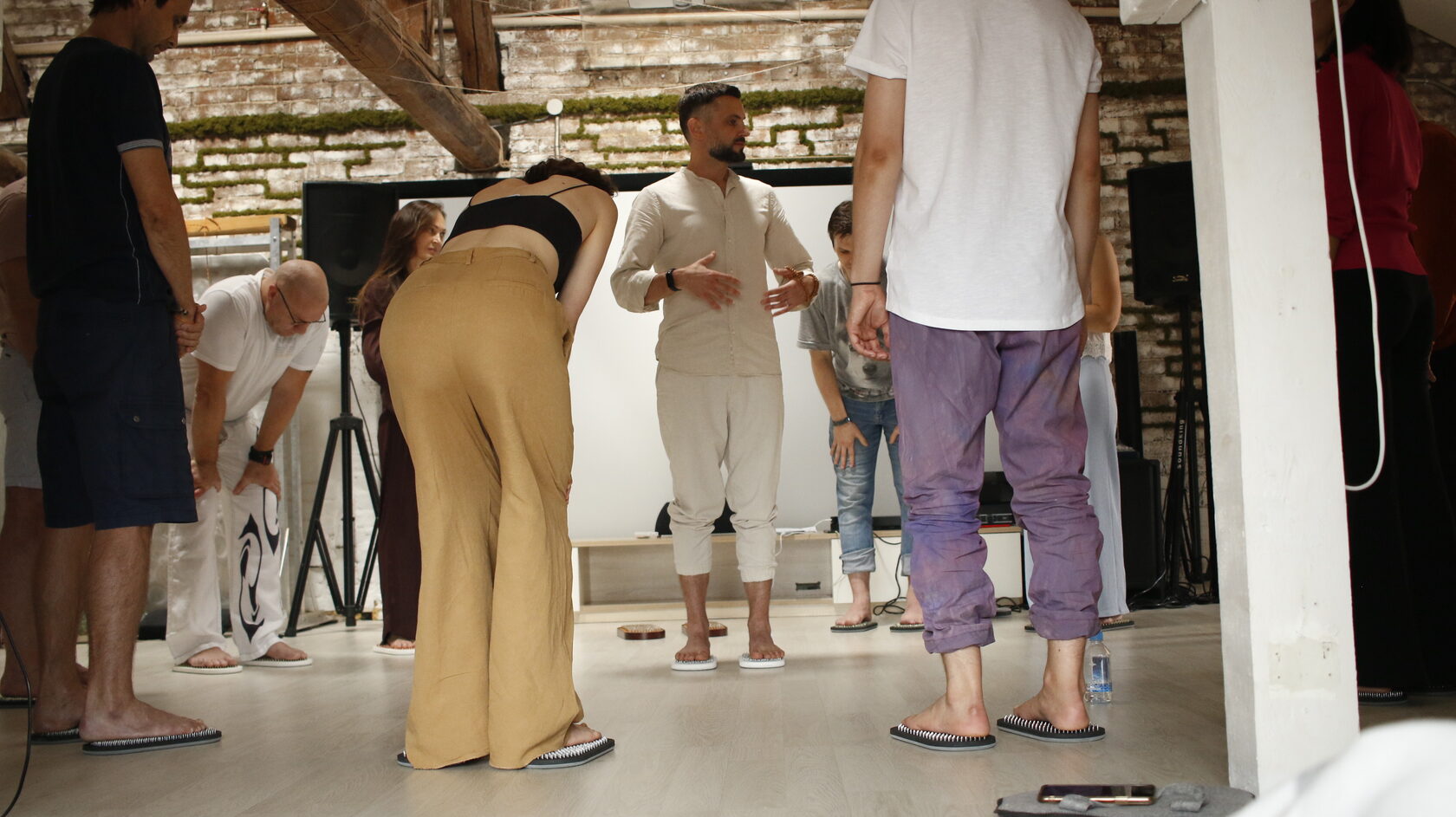
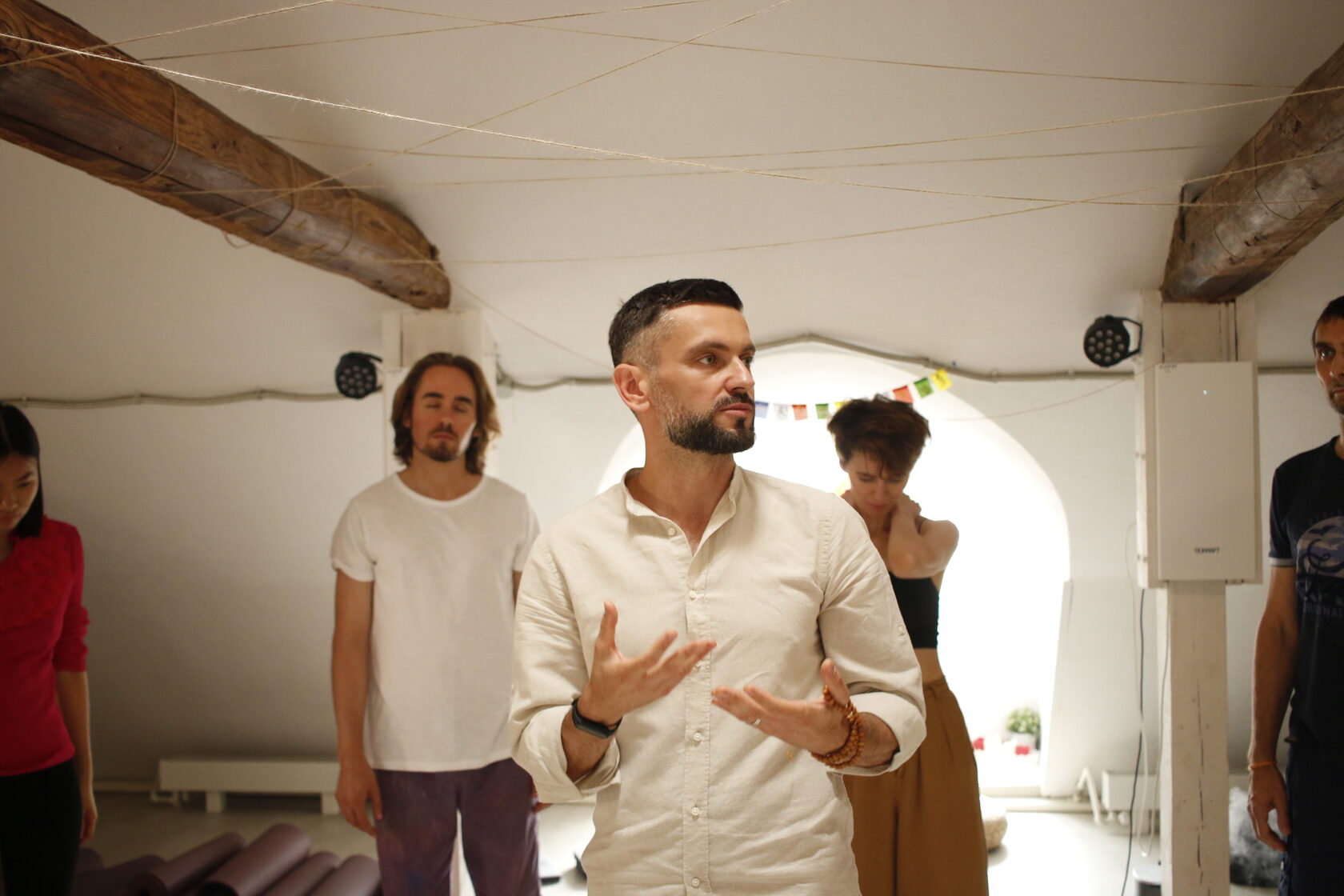
The guide explains the practice to the group
Participants' bare feet on nail boards
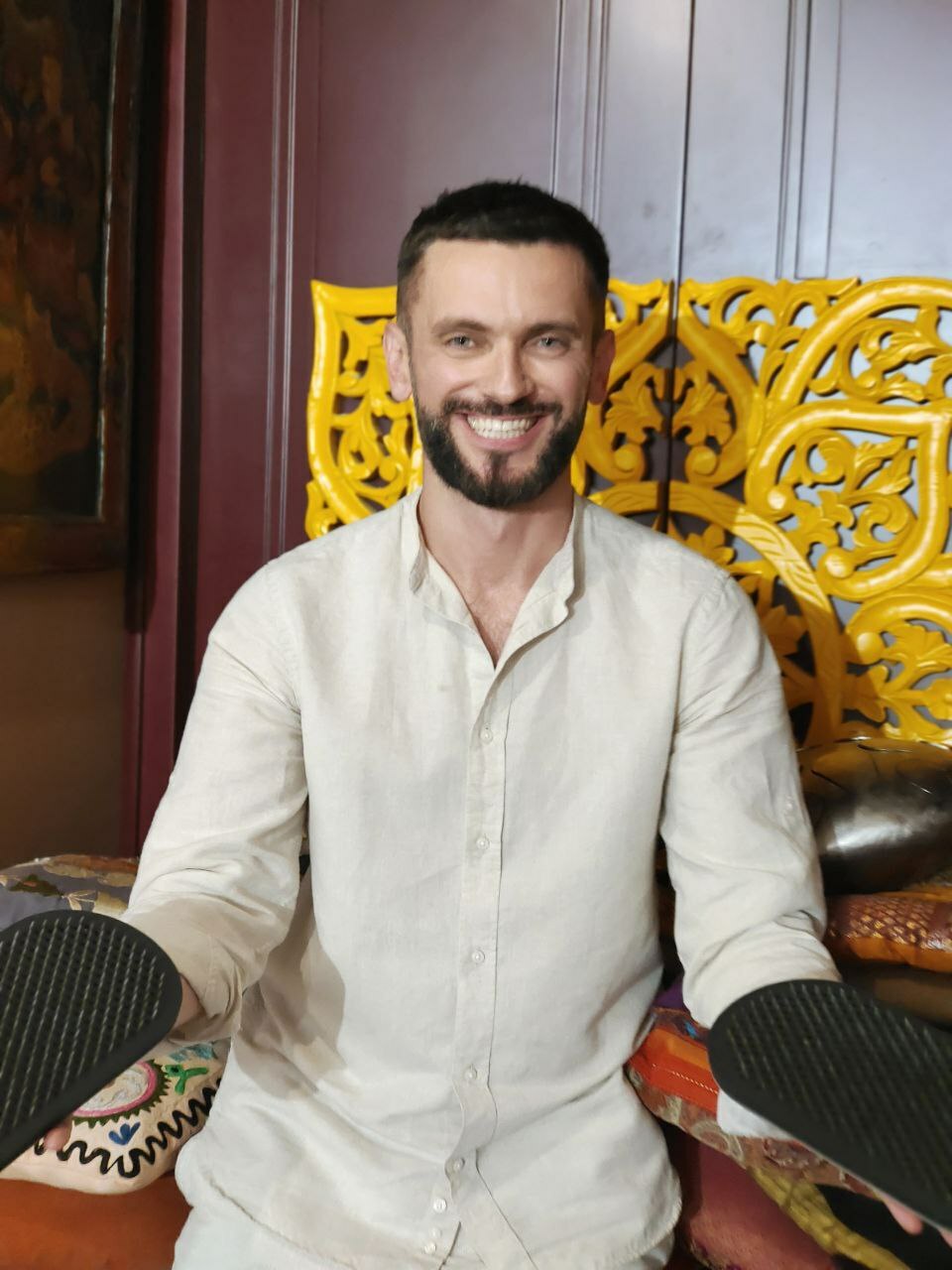
The guide holding sadhu boards in his hands
08

Your guide

Dimitri Subbotin

Guide in the practice of nail standing

“I worked in sales for years and was drained by the end of every day. In 2020, in Nepal, I heard about standing on nails as a way to unload the mind. Later I joined Paak Dzhivan's class in Moscow and stood on the board for an hour. After that hour my life turned 180 degrees.”

Today Dimitri stands on nails several times a week and leads circles in Lisbon.

  • Diploma of the SadhuRaWays school of nail therapy, Moscow
  • Five years of practice in Lisbon
09

Questions and facts

Before your first circle

Does it hurt?

Yes, the sensation is strong, especially in the first minute. Then the body adjusts and it becomes possible to relax. That is the practice.

Can the nails injure me?

No. Your weight is spread across hundreds of nails and the skin stays intact. They leave marks on your feet that fade quickly.

How long do I have to stand?

As long as you choose. Beginners start with one or two minutes. It is not a competition, and you can step off at any moment.

Do I need experience?

No. The circle suits people stepping onto nails for the first time as well as those who already practise.

Who should not do it?

People with heart disease, epilepsy, acute allergies, or inflammation or wounds on the feet, anyone who is pregnant, and anyone under the influence of alcohol or drugs. If in doubt, ask your doctor.

Interesting facts

Why is the first minute the hardest?

In a 2011 study, 32 people lay on a mat of plastic spikes. Pain peaked within the first 30 seconds, then eased, while relaxation grew. Participants describe the same on the board.

Why does it feel different every time?

Practitioners compare the board to a thermometer. It shows how much tension you brought with you today: on a calm day standing is easier, on a hard day it is tougher.

Why is standing harder than lying down?

Lying down, your weight is shared between thousands of points. Standing, all of it rests on your feet. That is why standing is shorter and stronger.

Where does the practice come from?

From India's sadhus, ascetics who choose one practice and follow it for years. The circle repeats this in a compressed form: a few minutes on the board with a clear intention.

How long can a person stand?

The Guinness World Record is 13 hours, 13 minutes and 13 seconds, set in Dubai in 2024. You don't need that: in the circle a few minutes are enough.

What does the board teach first?

To come to terms with your own mind. It shouts “danger” when there is none. When you explain that to your body, the sensation changes, and that experience stays with you.

Book your place

Come with an intention to change something in your life. An hour and a half, once a week.

When
Every Thursday, 19:00–20:30
Where
Estefânia, Lisbon
Contribution
€45 per session
Instagram
@firstsadhu

WhatsApp will open with a ready message. Send it and we will confirm your place.